
Knowledge Centre

Higher Education Institutes & Qualifications
Higher Education Institutes want their graduates to stand out in the job market, and CIBA accreditation gives their qualifications credibility, relevance, and alignment with industry expectations.
Accredited qualifications give graduates a direct pathway into CIBA Chartered designations, making them more employable and more valuable to employers.
1. What You Need to Know (Definition & Context)
Accreditation = trust. CIBA accreditation connects university programmes with professional reality. It ensures qualifications are aligned with business and industry needs, and that graduates don’t just leave with a degree, they leave with a clear route of obtaining their Chartered Designation.
Why Higher Education Institutes pursue it:
Attract more students with industry-recognized programmes
Build credibility with employers and regulators
Ensure graduates have a clear path to professional designations
Examples: A BCom (Accounting) accredited by CIBA automatically aligns with the entry route for the Chartered Business Accountant in Practice (CBAP), making graduates more employable.
2. Why It Matters to You (Impact Section)
For Higher Education Institutes:
Position your programme as industry-backed and future-ready
Gain credibility with employers, students, and regulators
Give graduates a direct pathway into CIBA Chartered designations
For students/graduates:
Clear route of obtaining our Chartered Designation
Higher employability and earning potential
Recognition across industries and borders
3. Frameworks, Standards, or References
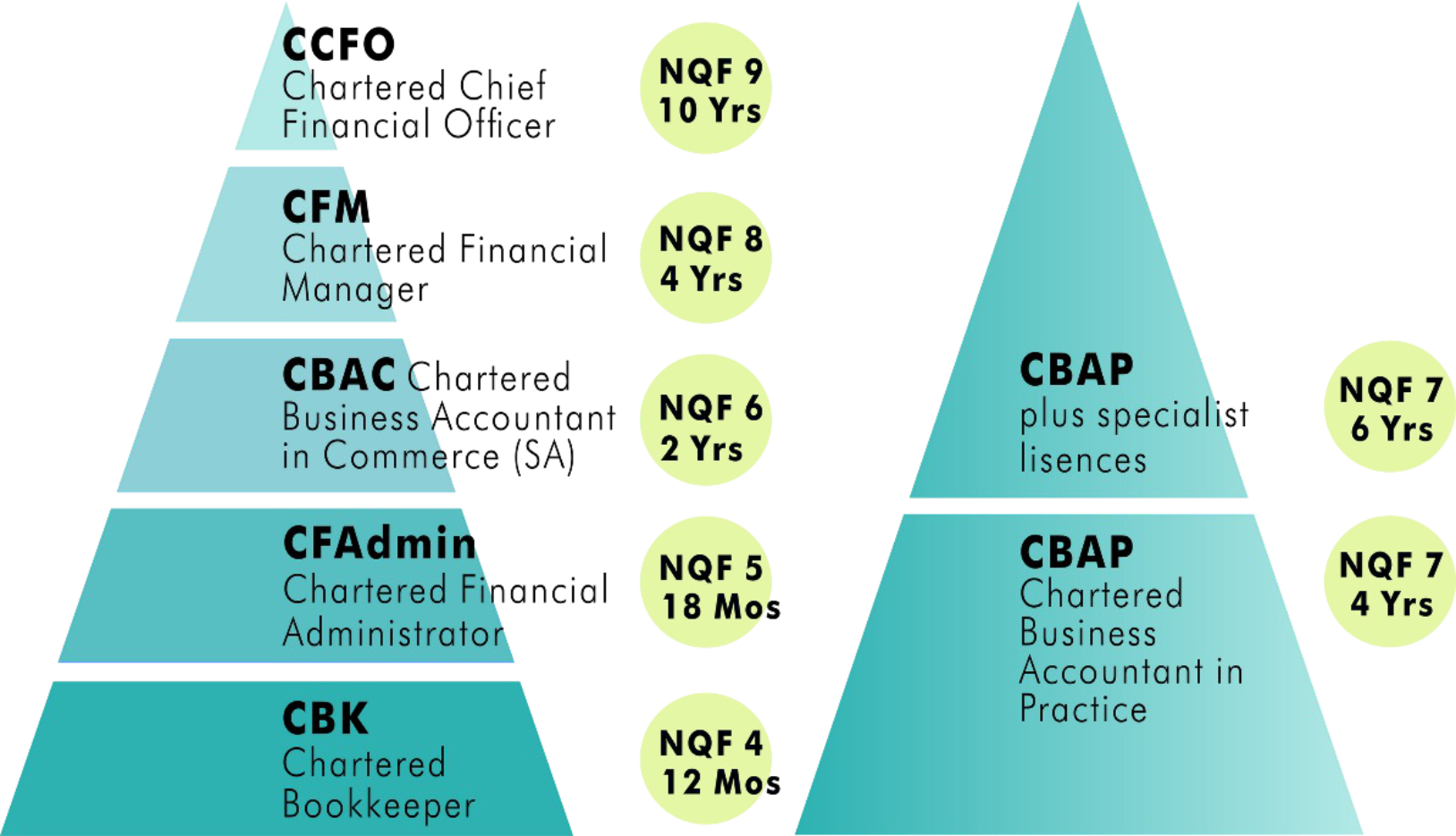
SAQA’s NQF framework – Each designation requires a specific NQF level:
CIBA Accreditation Policy – Summary + link
Collaboration agreements (MoU) – How CIBA and Higher Education Institutes/TVET colleges work together
4. How to Apply (Action Steps)
Initial contact – The university reaches out to CIBA to begin the accreditation process.
Document submission – The institution provides all required institutional and curriculum documents.
Self-mapping – The university maps its programme against the CIBA Competency Framework.
Committee review (documents) – CIBA’s Accreditation Committee reviews the submitted documents and the self-mapping exercise.
Decision: Provisional Accreditation – If requirements are met, the Committee grants provisional accreditation.
Provisional accreditation conditions –
Valid for three (3) years
Pending a physical site inspection of the campus
Campus site inspection – CIBA conducts an on-site evaluation to confirm facilities, resources, and programme delivery.
Committee review (site report) – The Accreditation Committee reviews the findings of the site inspection team.
Decision: Full Accreditation – If the site visit confirms compliance, the Committee grants full programme accreditation.
Full accreditation conditions –
Valid for five (5) years
Subject to renewal based on ongoing compliance and quality standards
5. Accredited Higher Education Institutes
We are proud to collaborate with leading Higher Education Institutes who meet our standards. Their accredited qualifications provide students with a direct obtain their Chartered Designation.